


Community /
Blogs
The opinions expressed in these blogs are solely those of the people who wrote them, and do not represent the views of WPSU or Penn State University.
Local Food Journey
How to plan for frost in your garden
Posted by Jamie Oberdick on 09/06 at 08:48 AM
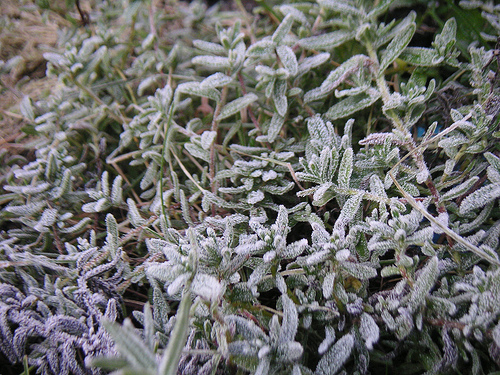
Frost on winter savory plants
Last night was quite chilly for a lot of people in central PA but it seems that many of us escaped frost. However, the slow march of the seasons are inevitable, and eventually there will be frost on the Happy Valley pumpkins. Frost or even temperatures below 40 are very bad for plants like tomatoes, basil, beans, cucumbers, etc. On the other hand, a lighter frost is okay for plants like beets, chard, broccoli, lettuce, cabbage, carrots, etc.
Here are some tips for both figuring out when your garden might get hit by frost, and what to do when it does.
How to figure out when it “might frost”
- Know when the average first frost/freeze will happen in your area.
- Frost forms best when winds are calm and skies are clear due to a phenomenon called radiational cooling. The clear skies and calm winds allow heat near the ground to escape much more easily (lower clouds create a greenhouse effect on a grand scale). One thing to keep in mind, if it’s breezy when you go to bed, it might not stay that way. Pay attention to weather forecasts.
- Speaking of weather forecasts, heed any frost advisories or freeze warnings issued by the National Weather Service. While not perfect and despite the absolute myth that weather forecasts are always wrong, much of the time you get frost when these are issued. Not sure if you are under an advisory or warning? Go to the National Weather Service State College site and type in your zip code in the box titled “Customize your Weather.gov.”
- Ever hear of the dew point? Often TV forecasters mention it during the broadcast, it’s a measure of how much humidity is in the air. If the dew point is higher than 45, you should be good.
- Low-lying plants sometimes are protected by the heat of the soil; however, taller plants like tomatoes do not get this protection.
- Your location can be a huge factor. Pay attention to where frost forms in areas around you when you are, say, driving to work in the early morning. How does it compare to your backyard? Is the frost thicker, more sparse, or even not there at all? You can judge what kind of microclimate for frost is present in your garden. Believe it or not, frost and temperatures can vary a good deal on a calm night just hundreds of feet away.
How to protect from frost
- Harvest what you can the evening before. Some things like tomatoes will ripen on the counter (or if not, there’s always fried green tomatoes). It’s better to be safe than sorry with frost.
- If possible and you want to extend the harvest, cover your garden with tarps. Be sure temperatures are at least in the upper 30s before you remove the tarps.
- For those veggies that can take a frost, good idea to mulch them heavily now. You can harvest things like parsnips, beets, arugula, lettuce, etc. well into late fall or even in some cases early winter as long as the ground isn’t frozen.
- If temperatures are expected to get below 40, harvest your most tender herbs like basil.
 Author: Jamie Oberdick
Bio: Editor, Local Food Journey | Passionate about supporting local food in Central PA
Leave a Comment
Commenting is not available in this section entry. « Restaurant puts local food in your Green Bowl It's "Pure Space" with Unicorn Kid »Most recent entries
-
Our Local Food Journey comes to an end
- Wednesday, January 31, 2018
- By Jamie Oberdick in Local Food Journey
 Winter isn’t a quiet time at the farm
- Wednesday, January 31, 2018
- By James Eisenstein in Local Food Journey
-
Get the taste of garden season right now by growing herbs indoors
- Friday, January 26, 2018
- By Jamie Oberdick in Local Food Journey
-
All you need to know about PASA’s Farming for the Future conference
- Friday, January 19, 2018
- By Jamie Oberdick in Local Food Journey
Categories
Archives
- January 2018
- December 2017
- November 2017
- October 2017
- September 2017
- August 2017
- July 2017
- June 2017
- May 2017
- April 2017
- March 2017
- February 2017
- January 2017
- December 2016
- November 2016
- October 2016
- September 2016
- August 2016
- July 2016
- June 2016
- May 2016
- April 2016
- March 2016
- February 2016
- January 2016
- December 2015
- November 2015
- October 2015
- September 2015
- August 2015
- July 2015
- June 2015
- May 2015
- April 2015
- March 2015
- February 2015
- January 2015
- December 2014
- November 2014
- October 2014
- September 2014
- August 2014
- July 2014
- June 2014
- May 2014
- April 2014
- March 2014
- February 2014
- January 2014
- December 2013
- November 2013
- October 2013
- September 2013
- August 2013
- July 2013
- June 2013
- May 2013
- April 2013
- March 2013
- February 2013
- January 2013
- December 2012
- November 2012
- October 2012
- September 2012
- August 2012
- July 2012
- June 2012
- May 2012
- April 2012
- March 2012
- February 2012
- January 2012
- December 2011
- November 2011
- October 2011
- September 2011
- August 2011
- July 2011
- June 2011
- May 2011
- April 2011
- March 2011
- February 2011
- January 2011
- December 2010
- November 2010
- October 2010
- September 2010
- August 2010
- July 2010
- June 2010
- May 2010
- April 2010
- March 2010
- February 2010
- January 2010
- December 2009
- November 2009
- October 2009
- September 2009
- August 2009
- July 2009
- June 2009
- May 2009
- April 2009
- March 2009
- February 2009
NO COMMENTS